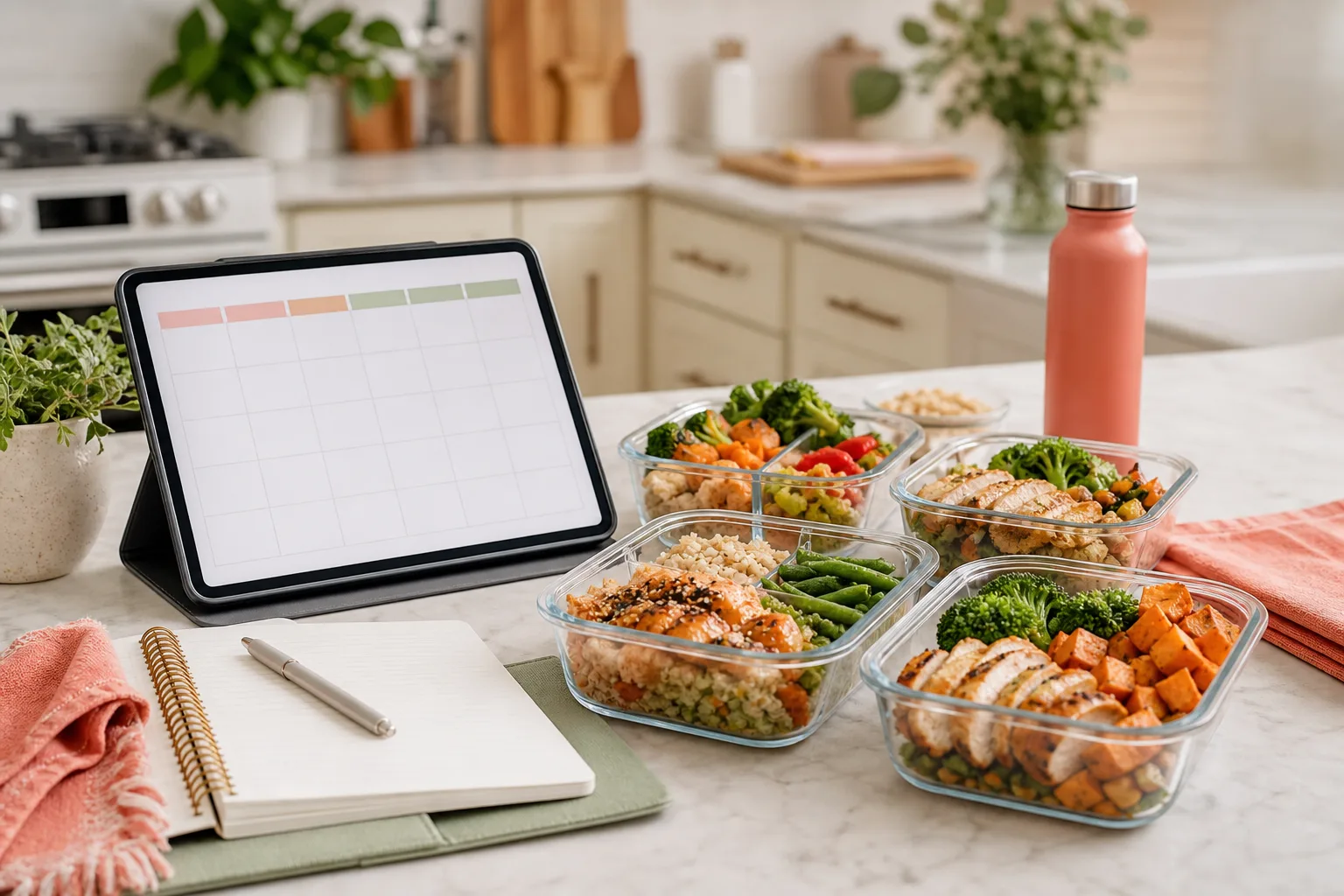

The real reason groceries go bad
Food waste usually isn’t about cooking skill. It’s about buying without a destination.
If an ingredient doesn’t have a meal attached to it this week, it’s competing for fridge space — and often loses.
The waste-cutting loop
-
Look — what’s already in the fridge / pantry?
-
Plan — assign meals that use those items first
-
Shop — only buy what’s missing for the plan
-
Cook — follow the calendar (with one flexible night)
Meal planning isn’t rigid. It’s a default path so food has a job.
Leftovers with a purpose
Build one night that expects leftovers:
-
Roast chicken → sandwiches or fried rice
-
Chili → baked potatoes or nachos
-
Extra rice → bowls or breakfast fried rice
When leftovers are on the calendar, they stop feeling like failure.
Shopping list discipline
A shopping list pulled from your meal plan beats a mental list every time:
-
Fewer “just in case” purchases
-
Fewer duplicate condiments
-
Clear quantities for the week you actually planned
How myDinnerPlan helps?
-
Plan dinners on a household meal calendar
-
Generate a shopping list from upcoming meals
-
Factor in pantry items so you don’t rebuy what you have
-
Share the plan so the whole household knows what’s for dinner
Less guessing. Less waste. More dinners that get eaten.
Start free and plan a lower-waste week.
A simple waste-cutting checklist
-
Assign every perishable a meal before it goes in the cart
-
Put the soonest-to-spoil items earlier in the week
-
Keep one leftovers night on the calendar
-
Freeze extras the same day you cook them
Household food waste is often a planning problem, not a cooking problem. The USDA’s tips for consumers reinforce the same idea: buy with a destination, store correctly, and use what you have.
myDinnerPlan helps by tying shopping lists to the dinners you already scheduled, so fewer ingredients arrive without a plan.
Public references: USDA food-waste tips MyPlate
Prefer a shared plan over sticky notes?
Try myDinnerPlan free