
A seven-day meal plan built around shared proteins and flexible sides lets households feed toddlers, parents, and grandparents from the same dishes. The schedule below demonstrates specific choices that balance textures, seasoning levels, and preparation time while keeping one main cooking session per evening.
Concrete Seven-Day Schedule for Mixed Ages
Roasted chicken thighs anchor Monday. The cook seasons a single tray with salt and olive oil, then pulls half the meat for toddlers after baking and leaves the rest crisp for adults. Steamed carrots and mashed potatoes complete the plate, with a small bowl of plain yogurt offered as a cooling dip. Tuesday shifts to baked salmon fillets alongside quinoa and green beans. The salmon receives only lemon and dill so younger eaters accept the mild flavor, while adults add a quick squeeze of hot sauce at the table. Wednesday features ground beef tacos in soft corn tortillas. Refried beans and shredded lettuce sit in separate bowls so each person assembles portions according to preference. Thursday returns to chicken, this time as a simple noodle soup. Carrots and celery cook until very soft, and the broth stays unsalted until served. Friday brings pork tenderloin roasted with apples. The fruit breaks down into a natural sauce that coats the meat without added sugar. Saturday uses black bean chili simmered with tomatoes and bell peppers. Brown rice and a tray of cornbread accompany the pot. Sunday closes the week with baked cod and roasted potatoes. A side of peas provides color and a familiar vegetable for the youngest diners.
Why These Proteins and Sides Anchor the Week
Chicken appears twice because its neutral taste and adaptable texture reduce the need for separate batches. Thighs stay moist even after reheating, which matters when grandparents prefer earlier meals and toddlers eat later. Salmon supplies omega-3 fats in a form that cooks quickly and flakes easily for smaller mouths. Ground beef delivers iron and works inside tortillas without requiring knife work at the table. Pork tenderloin offers a leaner red-meat option that pairs with fruit, cutting the need for heavy sauces. Cod keeps the weekend light while still providing a flaky protein that pairs with potatoes already in the pantry.
Quinoa and rice function as bulk carbohydrates that absorb flavors from the main dish, letting one pot serve multiple tastes. Carrots and green beans cook to different degrees of softness in the same steamer basket by staggering their addition times. Apples and tomatoes introduce natural sweetness that appeals across ages without extra ingredients. These pairings emerged from testing which proteins remain palatable after minor adjustments rather than from a fixed rotation.
Portion and Flavor Tweaks Made for Each Generation
Toddlers receive smaller, pre-cut pieces of the same protein served to adults. For the salmon, a portion is flaked and checked for bones before plating. Carrots for this group steam five minutes longer until they yield to gentle pressure from a spoon. No salt touches their serving until after the rest of the family seasons their food.
Parents eat the unmodified main dish and add texture through toppings such as chopped nuts or extra herbs kept on the side. Grandparents often request softer proteins, so the cook reserves some chicken thighs for an extra ten minutes in the oven to reach fall-apart tenderness. Chili receives a ladle without beans for anyone avoiding extra fiber, while the rice stays separate to control spice exposure.
These adjustments occur after the primary cooking step finishes. One baking sheet or pot produces the base, then three minutes of portioning and selective seasoning creates three acceptable plates. The approach avoids duplicate pans and keeps the kitchen clear for the next day’s setup.
How Pantry Items and Quick Swaps Handle Daily Changes
A stocked shelf of canned tomatoes, dried beans, and frozen vegetables allows the planned menu to absorb small disruptions. When the salmon delivery runs late, the same lemon-dill seasoning moves onto chicken breasts pulled from the freezer. Extra quinoa prepared on Tuesday becomes the base for a quick salad on Thursday by adding leftover peas and a spoon of yogurt.
Apples bought for the pork roast double as a snack or a simple dessert when plans shift. Cornbread baked on Saturday keeps well enough to accompany Sunday cod after a brief warm-up. Dry pasta sits ready if noodle soup needs stretching for an unexpected guest.
These swaps rely on items already measured into the weekly grocery list rather than last-minute purchases. The schedule therefore stays intact even when one family member’s schedule changes or a store shelf is empty. Readers who want to test the same structure can start a free account at /register.
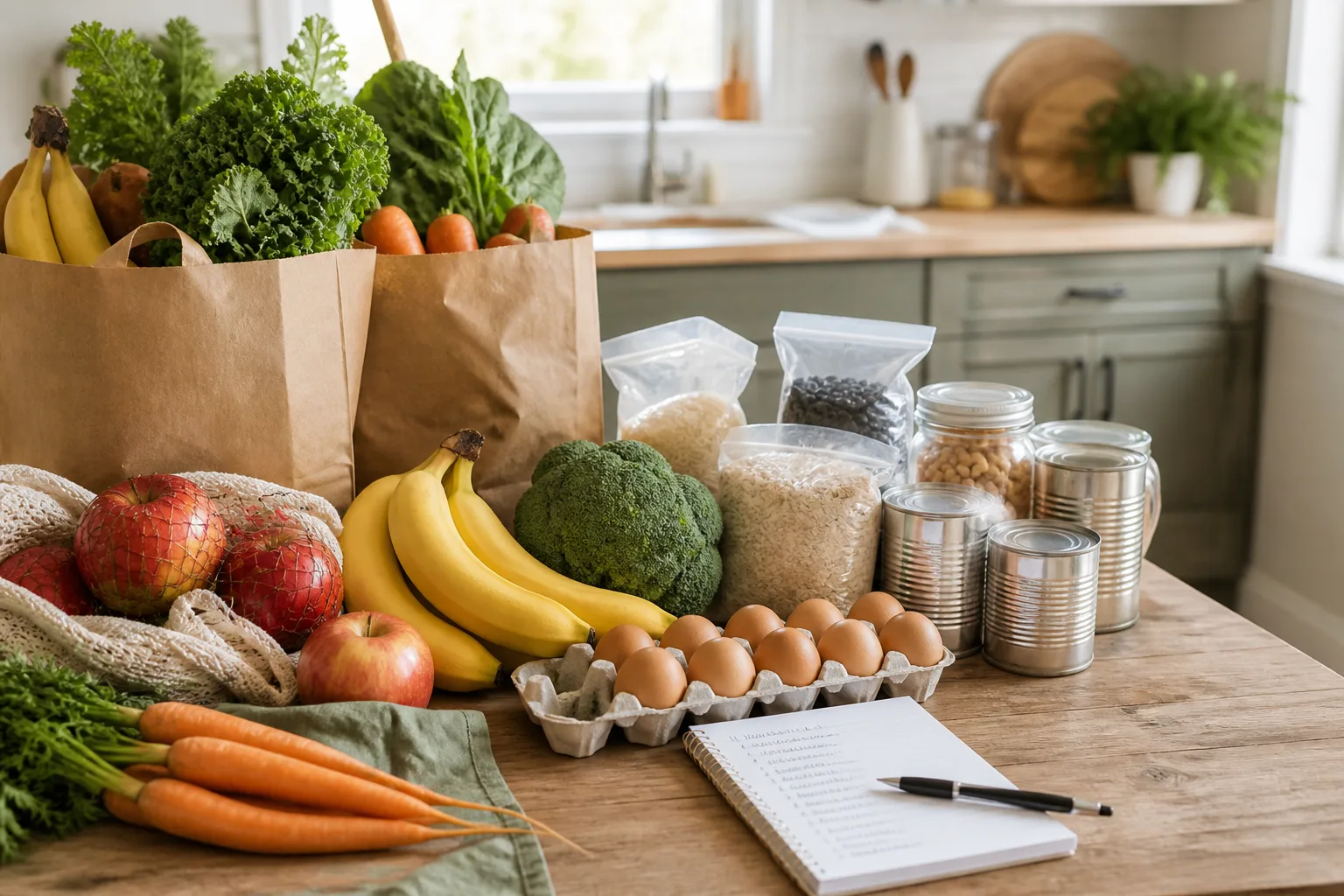
Implementing this plan starts with a compact grocery list that covers proteins, produce, and staples for the full week while minimizing waste and repeat trips. The core proteins include two whole chickens or equivalent thighs, a side of salmon fillets, one pound of ground beef, a pork tenderloin, a pound of black beans or two cans, and two pieces of cod. Produce centers on carrots, green beans, apples, tomatoes, bell peppers, celery, potatoes, lemons, and peas, with extras like onions and garlic for flavor base. Pantry backups feature quinoa, brown rice, cornmeal, soft corn tortillas, dried pasta, canned tomatoes, olive oil, and basic spices. Buying in these quantities supports the shared dishes without overstocking, and frozen vegetables stand ready for any last-minute gaps.
Nutritional balance across generations emerges naturally from the choices rather than from separate calculations. Toddlers gain easy-to-chew proteins and soft vegetables that deliver protein for growth alongside vitamins from the carrots and peas. Parents receive sustained energy from the quinoa and rice paired with iron-rich meats, while the omega-3s in salmon and cod support heart health without heavy preparation. Grandparents benefit from the softer textures and lower sodium options that still provide complete proteins and fiber from beans when tolerated. The natural sweetness in apples and tomatoes reduces reliance on added sugars, keeping blood sugar steadier for all ages at the table.
Time management improves once the cook establishes a rhythm of one main session per evening. Most proteins roast or simmer for forty to fifty minutes, during which sides steam or cook on the stovetop. Prepping vegetables the night before shaves ten minutes off the process, and using the same baking sheet for chicken and potatoes on Monday and Sunday cuts cleanup. Leftovers from larger batches, such as extra roasted chicken or chili, convert into next-day lunches or quick reheats, stretching the grocery investment. Families report that this approach frees thirty to forty minutes on most weeknights compared with cooking separate meals.
Flexibility extends beyond the listed swaps to accommodate changing schedules or dietary needs. If a grandparent prefers lower spice on chili night, the separate rice bowl already handles that request without extra work. Toddlers who reject new textures one evening can fall back on the plain yogurt or mashed potatoes already prepared. When a parent works late, the reheated salmon or pork remains moist because the original cooking method avoided drying steps. These built-in options reduce the pressure to create entirely new dishes midweek.
Family involvement strengthens when older children or grandparents help with simple tasks such as tearing lettuce or stirring yogurt dips. The shared table becomes a place for conversation about food origins rather than a site of negotiation over separate plates. Over several weeks the pattern becomes familiar, so even the youngest diners anticipate which nights feature their preferred soft textures. Long-term adherence improves because the plan avoids the fatigue of constant novelty while still rotating enough proteins to prevent boredom.
Readers who track progress can note which adjustments worked best and refine the list for the following week. The structure scales to larger households by simply increasing the base protein amounts without changing the seasoning or side logic. In this way the single-table approach supports both immediate nutrition and the practical realities of multi-generational living.
On food waste: USDA consumer food-waste tips
Ready to try this on next week’s dinners?
Open a free account