
A neutral chicken preparation roasted in advance can anchor an entire week of meals when households treat it as a flexible base rather than a finished dish. The approach relies on keeping the initial seasoning minimal so that later additions of spices, sauces, and sides create clear differences from one evening to the next. Families that already keep a shared library of household recipes often find this method reduces repeated purchases while still allowing each night to feel distinct.
Why a Single Neutral Roast Supports Rotation Without Repetition?
Roasting a large cut or several bone-in pieces with only salt, a light brush of oil, and perhaps a few sprigs of thyme produces meat that absorbs new flavor profiles readily. Because the chicken starts without strong cumin, chili, soy, or citrus notes, later additions stand out rather than compete. One evening the shredded meat can be warmed with smoked paprika and folded into corn tortillas with quick-pickled onions; the next it can be simmered briefly in a tomato and oregano sauce for an Italian-style skillet served over polenta. The same batch later accepts a ginger-scallion mixture for a simple rice bowl or a mustard-and-tarragon pan sauce for a plated dinner with roasted vegetables.
The practical advantage lies in batch timing. A single oven session of ninety minutes handles enough protein for seven modest servings when the household includes two adults and two children. Cooling and portioning the meat into airtight containers keeps texture intact for five days in the refrigerator; any remainder freezes well for a later week. This reduces the number of raw-protein handling sessions and the associated cleanup. Storage containers labeled by day help prevent accidental repetition of the same side dishes, which is the most common way a rotation collapses into sameness.
Tradeoffs appear when the base is overcooked during the initial roast. Dry meat accepts fewer sauces gracefully, so checking internal temperature at 160 degrees and removing the pan promptly preserves moisture for later reheating. Another consideration is container space; households with limited refrigerator room may need to divide the batch between fridge and freezer on day one. The method also assumes access to a modest range of pantry staples. Without them the rotation narrows quickly, which leads directly into the next consideration.
Where the Method Loses Variety When Pantry Checks Are Skipped
A neutral roast supplies only the protein; everything else comes from what is already on hand or can be assembled quickly. When a household skips a brief inventory before the week begins, the same three or four additions tend to reappear. For instance, if only bottled barbecue sauce and cheddar remain visible, multiple nights default to variations of barbecue chicken and cheese. The result is not inedible, yet the intended distinction between evenings fades.
The failure usually stems from incomplete visibility rather than lack of ingredients. A jar of curry paste tucked behind canned tomatoes goes unused if no one notes it during planning. Similarly, a half-used bag of slivered almonds can turn a plain green salad into a distinct meal component, yet it is easily overlooked. Without a short written or digital list of available flavor bases—citrus, vinegars, dried chiles, fresh herbs, cheeses, and condiments—the cook defaults to the most obvious items and the rotation stalls by Wednesday.
Another common breakdown occurs when sides are not considered alongside the protein. Chicken that works for tacos on night one may leave little contrast if night two repeats rice and beans simply because those items sit at eye level. Planning two contrasting carbohydrates and two vegetable preparations in advance prevents this overlap. The method therefore depends less on elaborate new recipes and more on confirming that existing supplies actually support differentiation.
Adapting Flavor Swaps Midweek for Changing Household Tastes
Even with careful initial planning, preferences shift. A child who accepted a mild coconut curry on night three may request something simpler by night five. The neutral base accommodates these adjustments because it carries no dominant seasoning that must be masked or balanced. Reheating a portion in a small skillet with butter and lemon, then serving it over buttered noodles, requires only five additional minutes and uses items most kitchens keep on hand.
Midweek adaptation works best when the cook keeps two or three backup flavor directions in mind rather than a rigid schedule. If fresh cilantro threatens to wilt, it can move from a planned Mexican night to a lime-and-cilantro rice bowl earlier than intended. Conversely, if a household member brings home unexpected vegetables from a market, those items can steer the next evening toward a stir-fry style preparation instead of the originally noted Mediterranean one. The key is treating the remaining chicken portions as interchangeable rather than assigned to specific days.
One practical limit is the cumulative effect of reheating. Meat that has been warmed twice begins to dry regardless of sauce. Households therefore benefit from freezing two or three portions early in the week so that later meals can start from never-reheated chicken. This small step preserves texture and expands the window for spontaneous changes without quality loss.
For readers who want to keep household recipes, pantry notes, and weekly plans in one place, myDinnerPlan can serve as an optional reference. Those interested may begin with myDinnerPlan.
Sample Seven-Night Rotation Built from One Roast
Night one opens with the shredded chicken warmed in a quick smoked-paprika and cumin rub, tucked into warm corn tortillas alongside pickled red onions and a spoonful of fresh salsa. The neutral starting point lets the spices bloom without any preexisting flavor clash. Night two shifts the same meat into a light tomato-oregano simmer finished with a knob of butter, then spooned over creamy polenta and finished with grated Parmesan. The change in starch and sauce creates an entirely different plate even though the protein remains identical.
Night three moves toward an East-Asian profile by tossing the chicken with grated ginger, sliced scallions, and a splash of soy until glossy, then serving it over jasmine rice with steamed broccoli on the side. Night four reverts to a simple American classic: the portions are reheated in a mustard-tarragon pan sauce and plated with roasted carrots and mashed potatoes. Each transition relies only on pantry items already inventoried, so no new shopping interrupts the sequence.
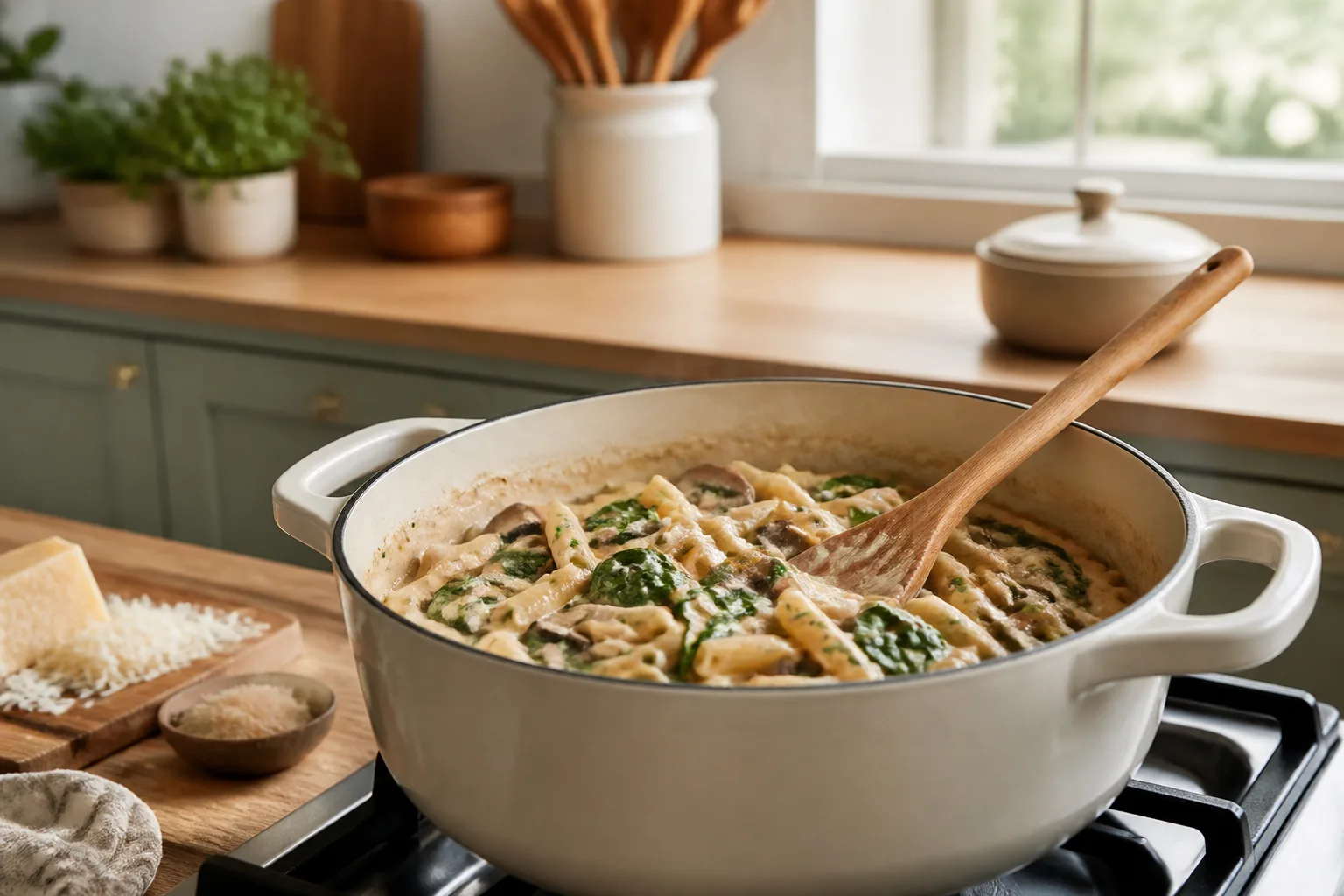
Night five introduces a mild coconut-curry direction. The chicken simmers briefly in coconut milk with a teaspoon of curry paste and a handful of frozen peas, then ladles over rice noodles. Night six uses the remaining meat for a lemony Greek-style salad: warmed pieces are scattered over romaine with cucumbers, olives, and feta, dressed with olive oil and oregano. Night seven closes the week by turning the last portions into a creamy mushroom skillet finished with a touch of cream and served over buttered egg noodles. The progression demonstrates how one neutral base supports seven visibly different meals without repeating a dominant seasoning or side dish.
Storage, Reheating, and Texture Preservation
Portioning immediately after the initial roast into seven labeled containers prevents the common error of grabbing too much on early nights and running short later. Freezing three of those containers on day one keeps the final meals from undergoing multiple reheating cycles. When a frozen portion is needed, it thaws overnight in the refrigerator and reheats gently in a covered skillet with a tablespoon of water or broth to restore moisture. This small discipline maintains the tender bite that allows sauces to cling rather than soak in.
Scaling the Method for Different Household Sizes
Larger families can double the initial roast and divide the extra meat into two separate weeks, while smaller households may roast only a single whole bird and stretch it across five nights with larger vegetable sides. The principle stays the same: keep the base neutral, confirm pantry contrast before the week starts, and leave two or three flavor directions open for midweek adjustments. When these steps are observed, the single oven session continues to deliver distinct nightly meals without additional raw-protein handling or repetitive cleanup.
On food waste: USDA consumer food-waste tips
