
Multigenerational households succeed with one shared protein and vegetable base each evening, followed by age-specific flavor and texture additions that keep everyone at the table without duplicate cooking. The method requires selecting anchors in advance and preparing a small set of neutral components that accept quick modifications.
Why Shared Anchors Reduce Daily Decision Load
Chicken thighs, salmon fillets, or ground turkey form reliable central proteins because each accepts multiple finishing styles without extra shopping. A large tray of roasted carrots and broccoli provides the vegetable component that stays consistent across plates. Families portion the base items first, then divide them into separate bowls before any seasoning occurs. This sequence cuts the number of individual choices from five or six per person down to two or three collective decisions about quantity and cooking method.
Parents report that the routine becomes automatic after the first week. They pull the protein from the refrigerator at the same time each afternoon, set the oven or skillet temperature once, and move straight to the modification stage. The shared base also simplifies grocery lists, since the same items appear on most weeks. When children request changes, adults already know which sauces or toppings remain compatible with the original cook time. The structure prevents the need to restart a meal when one person changes a preference at the last moment.
Where Divergent Tastes Cause the Method to Fail
The approach breaks when the anchor itself carries strong seasoning that cannot be removed. A curry-rubbed chicken, for example, leaves no neutral surface for a child who prefers plain meat. Similar problems arise with vegetables that have already absorbed oil and spices during roasting. In these cases the cook must either prepare a second unseasoned batch or accept that one diner will eat around the flavor.
Texture mismatches create another failure point. A steak cooked to medium may suit adults yet remain too chewy for toddlers, while a fully tender braise can feel mushy to teenagers. The method requires checking doneness at multiple points and removing portions early. Families who skip this step often discover too late that the entire batch needs replacement. Overly complex anchors, such as stuffed peppers or layered casseroles, also limit later adjustments because the components are already combined. Simple grilled or baked items preserve the greatest flexibility.
Making Real-Time Flavor and Texture Adjustments
After the anchor rests on a cutting board, cooks divide it into three or four smaller bowls. One bowl receives only salt for the youngest eaters. A second bowl gains mild herbs or a light cheese sauce for school-age children. Adults season the remaining portions with stronger spices, citrus, or finishing oils. The same division applies to vegetables: some stay plain, others receive a quick toss with butter and parsley, and the rest accept chili flakes or vinaigrette.
These additions take under five minutes when the supporting ingredients sit within arm’s reach. Pre-measured spice blends stored in small jars speed the process further. Texture changes happen through brief additional cooking steps such as a minute under the broiler for crisp edges or a quick mash with a fork for softer pieces. The key is to perform every change after the shared cooking finishes, so the base remains uniform until the final plating stage. When one diner rejects an addition, the cook simply returns that portion to the neutral bowl and tries a different layer.
Refining the Approach After Several Weeks of Use
After consistent use, households notice which proteins tolerate the widest range of later adjustments. Turkey and white fish emerge as more forgiving than beef or pork because their mild flavor does not clash with either sweet or savory toppings. Families also learn to keep one vegetable component completely plain each night rather than roasting everything together. This single plain batch serves as insurance when an unexpected preference appears.
Over time the planning shifts from nightly decisions to a short weekly review of the coming anchors. Cooks note which modifications worked well and repeat those combinations while retiring those that required too many extra steps. The system gains stability once each age group has two or three reliable flavor profiles attached to the common base. myDinnerPlan offers one optional place to record these profiles and generate the next week’s anchors. Readers ready to test the method can begin at /register.
Sample Meal Sequences Across a Full Week
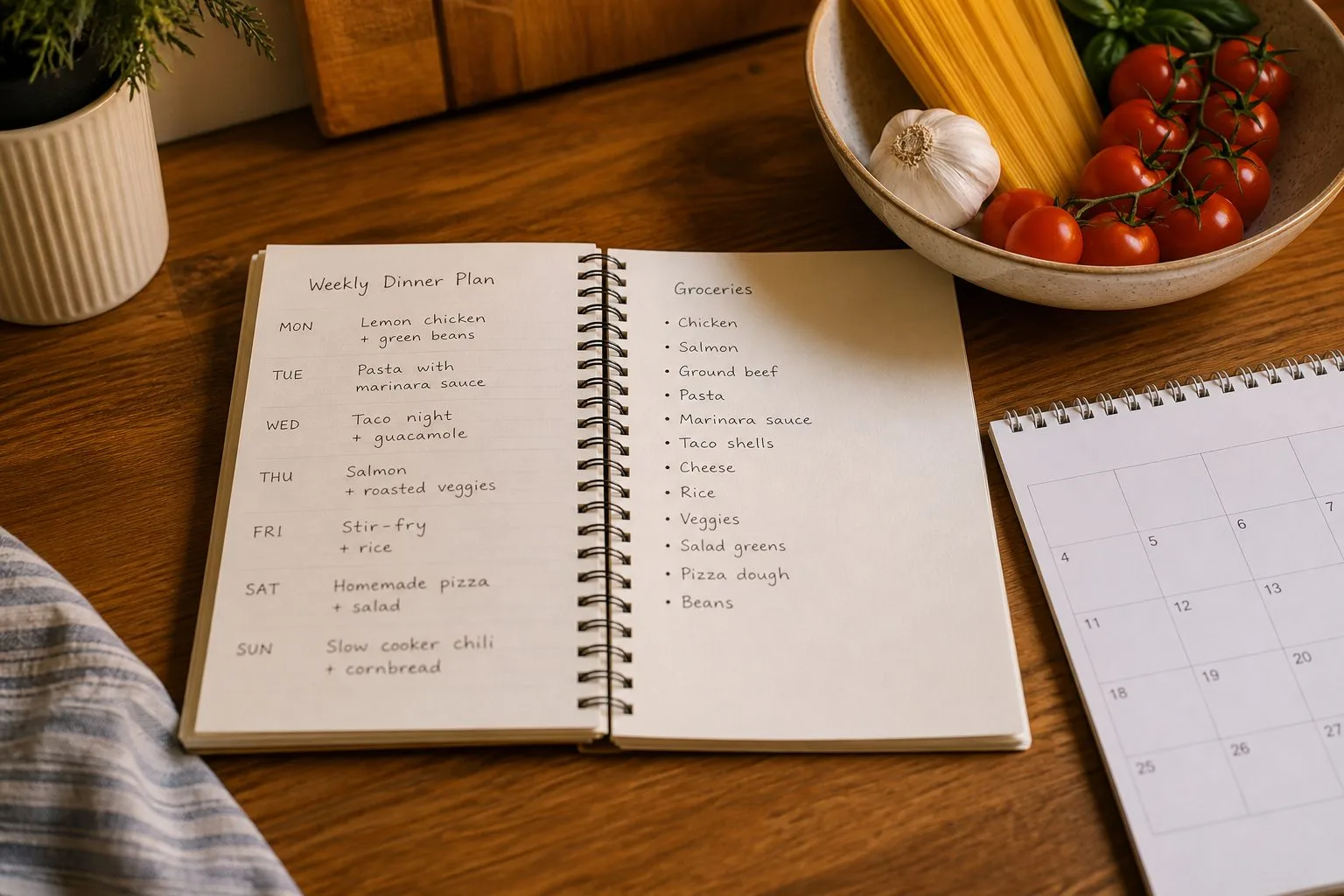
A practical way to begin involves mapping one anchor protein and one vegetable base to each weekday, then listing the three age-tiered tweaks that follow. Monday might open with baked chicken thighs and steamed broccoli. Toddlers receive plain portions with a pinch of salt; school-age children get a light honey-mustard drizzle; adults finish with smoked paprika and a squeeze of lime. Tuesday shifts to salmon fillets paired with roasted carrots. The youngest eat the fish plain with a lemon wedge on the side, middle diners add a yogurt-dill sauce, and adults receive a caper-and-olive topping. Wednesday uses ground turkey formed into loose patties alongside green beans. Plain patties suit the smallest eaters, a mild tomato sauce covers the school plates, and adults season theirs with cumin and chili.
By Thursday the pattern repeats with a new protein such as cod and cauliflower, keeping the modification list short enough to memorize. Friday allows a slightly more involved anchor like oven-baked meatballs, yet still reserves one unseasoned tray for quick division. Families who follow this rhythm report that grocery shopping shrinks to a single list of eight to ten items, most of which store well for several days. The weekly map also surfaces patterns: certain vegetables such as carrots accept sweet or savory layers equally, while others like broccoli reward only mild additions for younger diners.
Addressing Dietary Restrictions Without Separate Cooking
When one household member follows a low-sodium plan or avoids dairy, the same division bowls accommodate those limits before stronger flavors are added. A small ramekin of nutritional yeast replaces cheese sauce for the dairy-free adult, while the child’s plain bowl remains untouched. Gluten-free modifications stay equally simple because the base proteins and vegetables carry no breading. The cook simply withholds any shared sauce that contains wheat and prepares a separate small batch of compliant topping in the same five-minute window.
Allergies that require total separation, such as tree-nut contamination, are handled by storing the restricted ingredient in a lidded container away from the main workspace. The neutral bowls stay free of the allergen until the final plating step, preserving one shared cooking cycle. Over several weeks the household learns which commercial spice blends already list allergens on the label, allowing pre-measured jars to be swapped for compliant versions without extra label reading each night.
Tracking Nutrition Across Age Groups
Because every plate begins with the same protein and vegetable quantities, parents can estimate macronutrient ranges quickly. A four-ounce chicken thigh plus half-cup of broccoli supplies roughly twenty-five grams of protein and four grams of fiber for an adult portion. The toddler receives a two-ounce piece and quarter-cup serving, automatically scaling the totals downward. Adding a cheese sauce increases calcium for school-age children without altering the base numbers. Adults who top their portions with olive oil gain healthy fats while the younger plates remain lower in calories.
After a month of consistent use, many families photograph one representative plate per age group and log the images in a shared note. The visual record reveals whether any age group consistently under-eats vegetables or over-relies on the same topping. Adjustments then occur at the weekly planning stage rather than during dinner service. The data also helps when pediatricians request typical intake examples, since the photographs document actual served portions rather than recalled estimates.
Extending the Method to Breakfast and Lunch Leftovers
Although the original routine centers on evening meals, the same anchor principle applies to breakfast scrambles or lunch boxes assembled from dinner remnants. A plain egg base cooked in a large skillet can receive cheese and mild salsa for children while adults add spinach and hot sauce. Leftover roasted vegetables from the previous night become the vegetable component in a lunch container, divided into plain and dressed sections before packing. This reuse reduces morning decisions to the same two or three choices that already govern dinner. Families note that the consistency across meals further lowers resistance from children who already recognize the flavor profiles.
When the Household Composition Changes
The system remains stable when a grandparent joins for several weeks or a teenager departs for college. The extra adult simply receives the strongest seasoning tier already prepared for other adults, while the departing member’s usual bowl is omitted without altering the cooking sequence. Temporary visitors with strong preferences receive their modifications in the same five-minute adjustment window. Because the base remains neutral, no new shopping or separate cooking arises. The only required update is a quick note on the weekly map indicating which additional topping jar to place on the table.
Continued use therefore scales with household size rather than requiring redesign each time membership shifts. The core discipline—cook once, divide early, season last—stays constant regardless of how many people ultimately sit down.
